| | In this issue: - Fall Work Days
- Annual Meeting Save the Date
- Equip and CSP Deadline Reminder
- Paw Paw, The "Indiana Banana"
- The Figurelli Family: A Small Farm Making a Big Impact
- HCSWCD Wins Governor's Award
- Dormant Seeding: Starting Your Garden has Never Been Easier
- Let it Be: Messy Gardens are Needed Too
- Pay Dirt Recap
- HCSWCD Strategic Plan in Progress
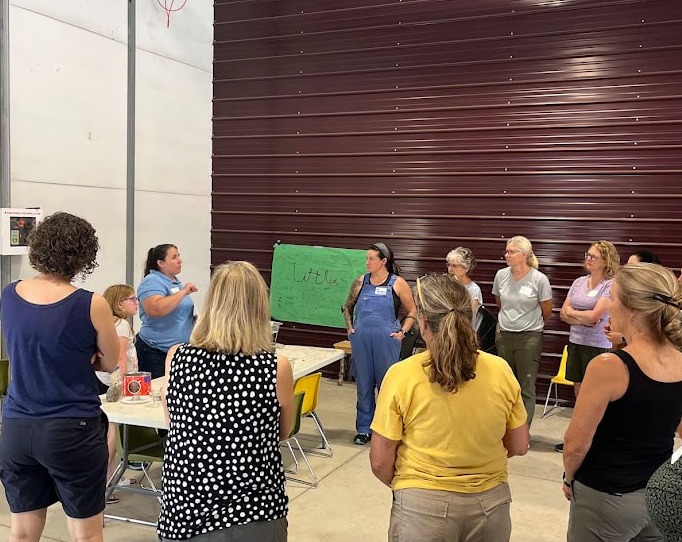
- HCSWCD Hosts Women 4 the Land in Hamilton County
- How to Protect Your Fall Trees from Animal Browsing
- Rain on Main 2025
| | | | Upcoming Events: - Annual Meeting February 19, 2026
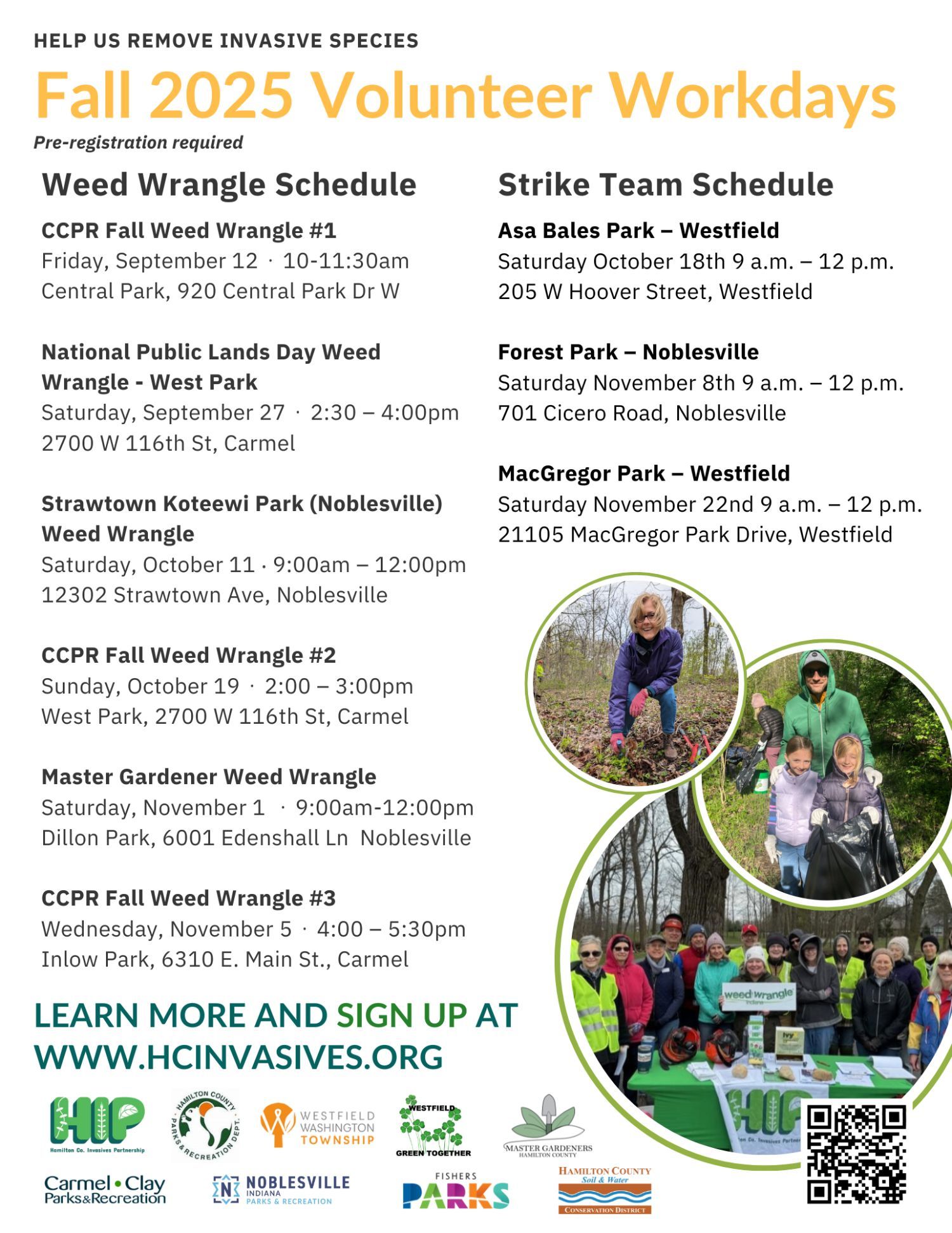
Save the Date! - Fall Strike Team Workdays
Learn more here. - Fall Weed Wrangles
Learn more here. - Board Meetings
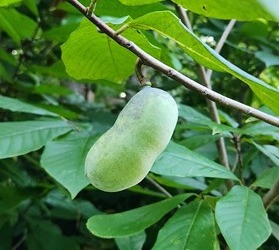
Learn more here. | | | | | | Paw Paw, The "Indiana Banana" If you grew up in rural Indiana, there is a good chance that you have encountered Paw Paw trees at some point in your life, maybe while roaming the wooded countryside. I remember my first discovery of this strange and unique-looking fruit when I was about 10 years old. My friend Kent and I often played in the woods behind my childhood home in rural Howard County, building forts, camping out, making trails, fishing Mud Creek, and exploring …
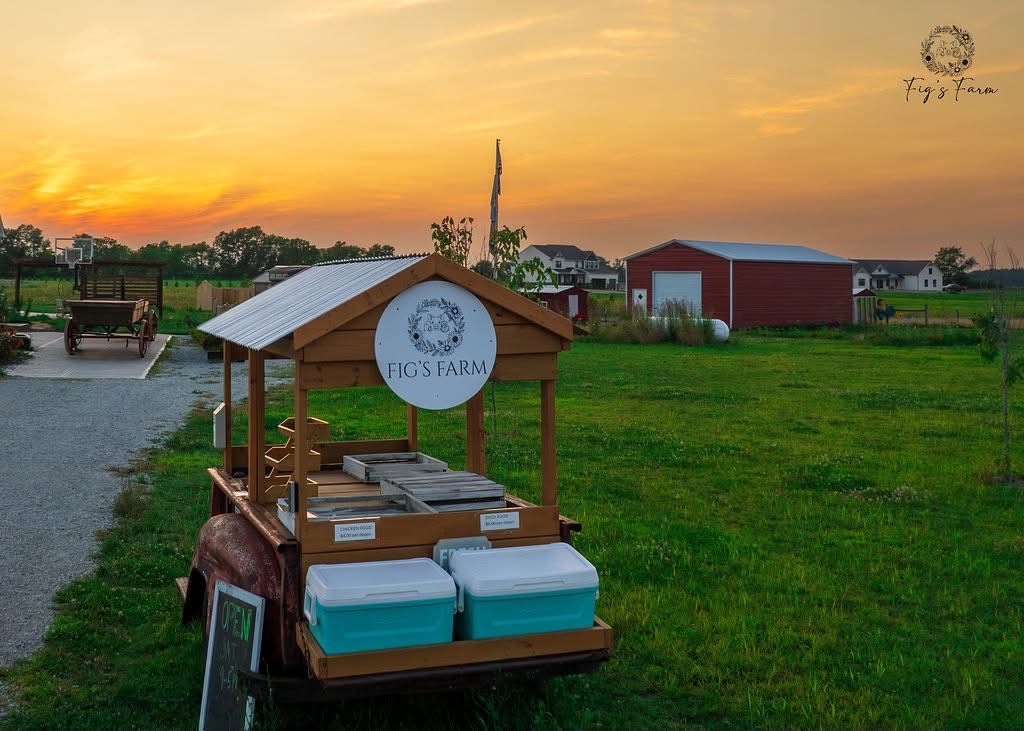
We also usually referred to the woods as “the swamp” because there were areas that had cattails and soggy black organic soil, which I now know meets the criteria of a “wetland.” It was not all soggy, though, and there was a spot, somewhat of a clearing free of larger trees on slightly higher ground, and that is where we discovered this Paw Paw grove... | | | | | | The Figurelli Family: A Small Farm Making a Big Impact Heather and Jeff Figurelli’s farm may only be 11 acres, but it’s already made a big impact in its three short years of existence. Their story started thanks to Heather’s love of gardening, pigs, and her family’s farming history.
“Our middle child, Tommy, also likes pigs,” Heather said. “We visited Oinking Acres in Brownsburg and fell madly in love with it.”
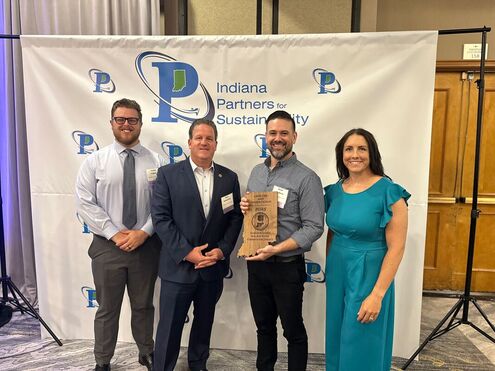
The family continued to enjoy Oinking Acres and found a sense of peace unlike any other, especially for Heather, who had recently lost her mother to brain cancer. This led to a strong desire to own a pig of their own. However, they lived in a subdivision in Fishers at the time. Heather had educated her HOA about native plants and had reached her limit with them on their property.... | | | | HCSWCD Wins Governor's Award for Environmental Excellence We are excited to share that the Hamilton County Soil and Water Conservation District was recently honored with the Governor’s Award for Environmental Excellence in the Land Use/Conservation category for our work leading the Hamilton County Invasives Partnership (HIP).
This is the highest environmental recognition in the state, presented annually by the Indiana Department of Environmental Management and the Governor’s Office to celebrate innovative, collaborative, and impactful environmental efforts. | | | | | | Dormant Seeding: Starting Your Native Garden has Never Been Easier As native plants become trendier, gardeners have seemingly endless options to beautify their spaces with these climate-resilient, ecosystem-supporting plants. From local SWCD plant sales, to native-exclusive nurseries, you can easily get overwhelmed trying to make the “right” choice while keeping sun, soil, and water conditions in mind. Buying and installing native plant plugs is an excellent option for planners curating their spaces, but what about our more type-B gardeners and native plant enthusiasts? | | | | | | | | Let it Be: Messy Gardens are Needed Too Across the U.S., citizen-science monitoring and everyday observations point to a troubling trend: insect populations are declining. Habitat loss, fragmented landscapes, and widespread chemical use are key drivers. Many people recognize this through the so-called “windshield phenomenon.” Twenty-five years ago, a single evening drive might leave a car windshield splattered with insects. Today, that’s far less common.
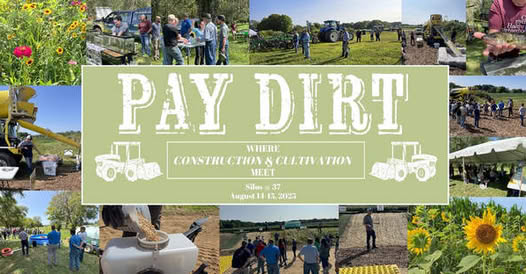
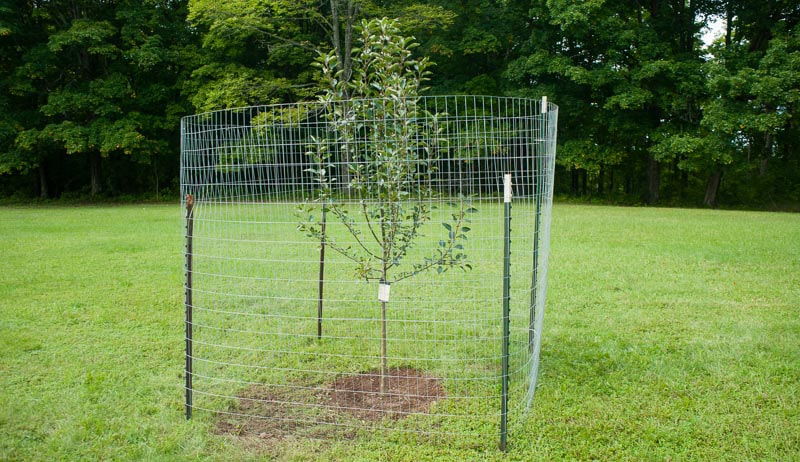
This matters. Insects provide essential ecosystem services—pollinating plants, feeding wildlife, and keeping other insect populations in check. A conservative estimate from Cornell University places the economic contribution of insects at more than $57 billion annually. When insects disappear, so do many of these benefits: fewer pollinators, less food for birds, and more pests left uncontrolled. | | | | | | Paydirt Recap On August 14-15, 2025, Noblesville Stormwater in group partnership with, among others, Elkhart County SWCD, the Hamilton County Surveyor’s Office, and Hamilton County SWCD held its first-annual Pay Dirt conference at the Hamilton County 4-H Fairgrounds. The two-day event included equipment demonstrations, construction site tours, educational sessions, as well as vendor contact time. Around 90 attendees learned how the stormwater sector is related to the agricultural and construction sectors through discussion, learning, and literal channels. While some folks thought rooms were too cold and technology did not always cooperate, the event organizers deemed it a success and look forward to hosting the event again next year in the fall. | | | | Hamilton SWCD Strategic Plan in Progress In the coming months staff and supervisors of the Hamilton County SWCD will be taking inventory of programs and prioritizing where to focus for the next 5-7 years. A renewed Strategic Plan document will be created to guide staff’s Plan of Work and help achieve the District’s overall objectives. This will begin with a SWOT analysis to help identify strengths, weaknesses, opportunities, and threats seen in District planning. Once the analysis and review is complete, an updated Strategic Plan will be developed and presented. The 2018-2022 plan can be viewed on our website. | | | | | | Soil and Water Hosts Women 4 the Land in Hamilton County This year Hamilton County SWCD hosted two Women's Learning Circles in Hamilton County through the Women 4 the Land program. Women 4 the Land is a program of the Hoosier Heartland Resource Conservation and Development Council dedicated to using science-based learning techniques for women's education on conservation topics. Learning circles typically include an informal discussion-based learning style, conservation demonstrations from natural resource professionals, and a tour of a conservation area. | | | | | | How to Protect Your Fall Trees From Animal Browsing Fall is the best season to plant trees in our zone because it allows the trees to focus their energy on creating a robust root system that will help them thrive even during summer droughts. Depending on the critters and humans in your space, your trees may require some additional protection.
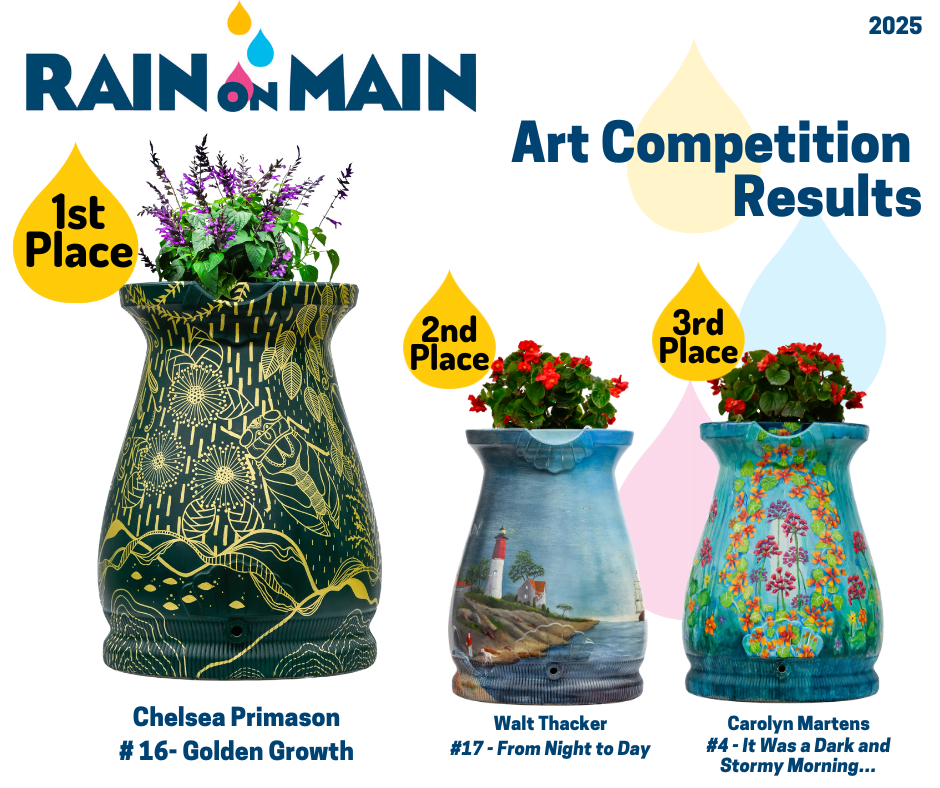
By the time fall tree planting season is in full swing, most insect pests have come and gone, so the focus turns to mammalian predators. Excluding animals like deer, rabbits, and rodents should be the focus for newly planted young shrubs and trees. | | | | Rain on Main 2025 Rain on Main concluded on August 23rd with the culmination of the online auction and People’s Choice competition at the Carmel Farmers Market. Chelsea Primason won both the People’s Choice and the overall Art Competition. Second place in the People’s Choice competition was the team from Janus Developmental Services. Second and third place in the art competition were Walt Thacker and Carolyn Martens. The Rain on Main team also recognized Linda Gilmore for her dedication to Rain on Main as our first ever ten-year participating artist!
Rain on Main is a painted rain barrel competition and auction held since 2015 in partnership with SWCD, City of Carmel, Carmel Stormwater, & Carmel Utilities. | | | | | | | | Thanks for reading! Watch out for our Winter newsletter in January. | | | | | | Hamilton County SWCD
1717 Pleasant St., Suite 100 | Noblesville, Indiana 46060
3177732181 | [email protected] | | | | | | | | | |